

Toan Dao published in Supply & Trade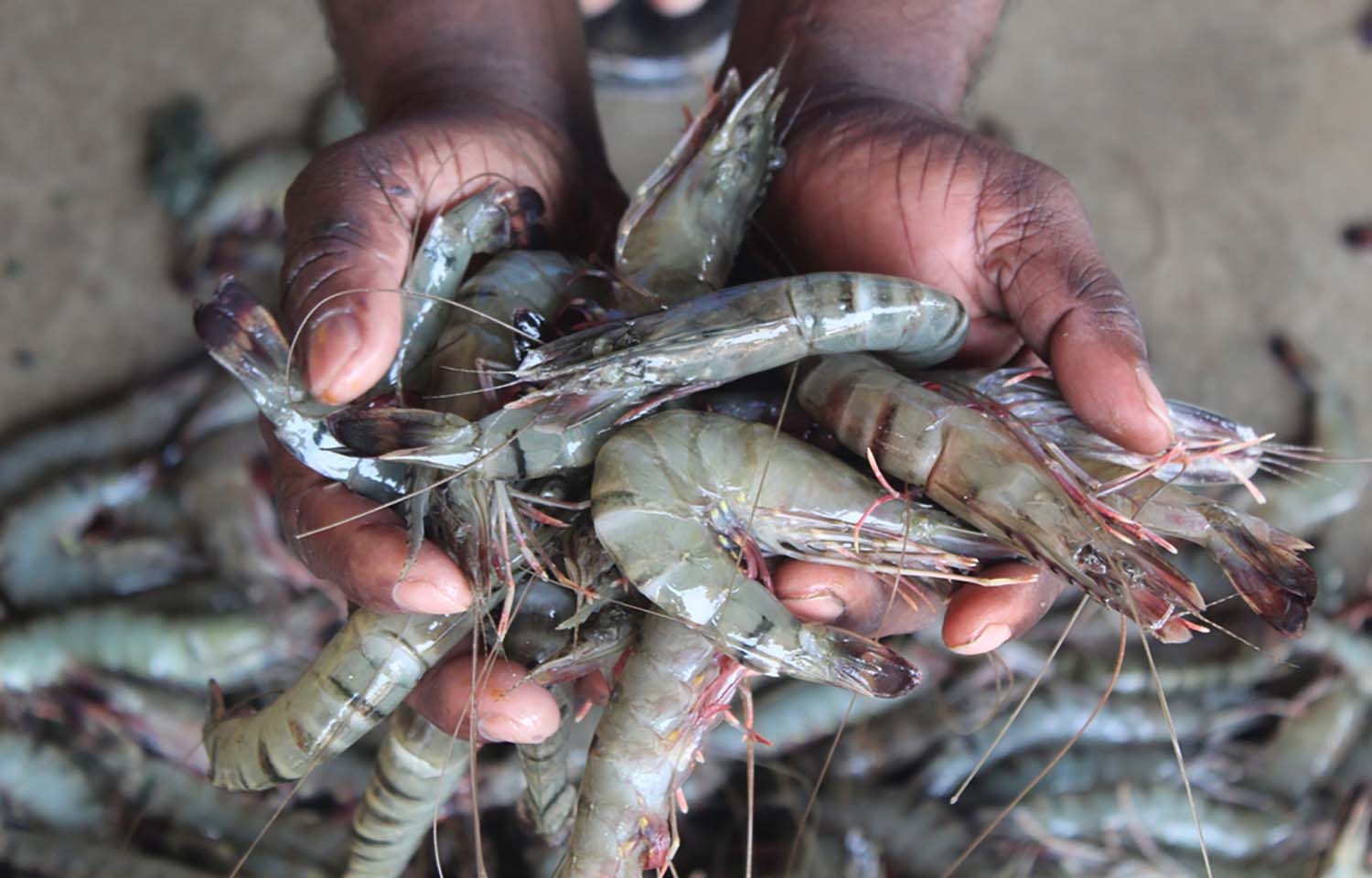 Indian shrimp producers are being forced to adapt their strategies more so than competitors like Indonesia and Vietnam due to U.S. tariffs | Photo courtesy of Biswaphotography93/Shutterstock
The
U.S.’s reciprocal tariffs on many shrimp-exporting countries are realigning
global supply chains and forcing major Asian producers, including Vietnam,
Indonesia, and India, to rethink their strategies.
India,
the largest shrimp supplier to the U.S., faces the most severe impact from the
newly implemented tariffs. The nation is currently subject to a 25 percent
reciprocal tariff, which could jump to 50 percent on
27 August under a new executive order from U.S. President Donald Trump. When
combined with existing anti-dumping (AD) and countervailing duties (CVD), the
total tariff burden could reach as high as 58.26 percent.
Even
though India has been able to secure
deals with nations like the U.K. to cushion the blow, the spike in
U.S. tariffs has still jolted India’s seafood industry, with Seafood Exporters
Association of India President Pawan Kumar G describing it as a “doomsday”
scenario for the seafood industry, The Economic
Times reported.
Others
in the industry, like Indian Aquaconnect Founder and CEO Rajamanohar
Somasundaram, described the new tariffs on Indian seafood as a “watershed
moment,” eroding price competitiveness, squeezing margins, slowing shipments,
and putting a USD 2.5 billion (EUR 2.1 billion) market at risk. The CEO,
however, told SeafoodSource the tariff shock should spur India’s shrimp
industry to rethink its traditionally held export-first mindset and begin
tapping the vast domestic market as a proactive strategy – not just a backup
plan.
“I
believe this is the moment to change not just as a fallback but as a deliberate
market strategy to cushion the impact. Though these discussions have mostly
stayed within industry circles, mounting pressure may soon push the idea into
the mainstream,” Somasundaram said.
He
also said he sees huge potential in urban consumers through modern retail,
quick-commerce platforms, and value-added ready-to-eat products. He urged the
government to mobilize large institutional buyers – from railways and airlines
to the armed forces – to absorb surplus and improve the nation’s nutrition. At
the same time, he called for rebalancing exports by elevating the E.U., East
Asia, and the Middle East from “backup” to “priority” markets, reducing
dependence on the U.S.
While
India recalibrates, another top Asian shrimp supplier, Indonesia, is reportedly
seizing the opportunity to boost exports to the U.S.
Siam Canadian Indonesia General Manager Cicilia Darmali told SeafoodSource that
Indonesia’s shrimp exporters have seen a sharp rise in orders from U.S. buyers
since Trump announced additional tariffs on India, with many now fully booked
through October. With a 19 percent reciprocal tariff and a 3.9 percent
anti-dumping duty from the U.S., Indonesian products are now more competitive
than other suppliers.
If demand remains strong
until the end of this year, prices should stay at a higher level, even as raw
material supply is projected to increase between October and December, Darmali said.
The
U.S. was the top destination for shrimp from Indonesia in the first half of
2025, as it imported 69,653 metric tons (MT) during the six-month period, which
was up 12 percent year over year. With India now facing significantly higher
tariffs, Indonesia’s prospects in the U.S. market have suddenly brightened,
according to industry blog Shrimp
Insights.
“However,
much will depend on how the revised tariff structure reshapes buying patterns
in the U.S. and whether Indonesia can sustain its momentum in value-added
exports to both traditional and emerging markets,” Shrimp Insights said.
Vietnam,
meanwhile, finds itself somewhere in the middle.
In
addition to the 20 percent reciprocal tariff the U.S. recently levied against
the country, many exporters from Vietnam were hit with a preliminary
anti-dumping duty of 35.29 percent and a
countervailing duty of 2.84 percent, bringing the total tariff load to 58.13
percent for some producers.
Nevertheless,
Minh Phu CEO Le Van Quang told SeafoodSource opportunities remain, as Vietnam
retains an edge in supplying value-added shrimp to the U.S. market, which not
all competitors can match. He also said he was cautiously optimistic that
rising prices in the U.S. will translate into higher margins for exporters,
motivating them to increase shipments in the future.
“At
present, the high U.S. reciprocal tariff means selling to the U.S. is still
unprofitable, while sales to other markets yield higher margins. However, U.S.
prices are expected to rise sharply in the future, with profits catching up to,
and eventually surpassing, those in other markets,” Quang said.
Quang,
however, voiced concern over the steep preliminary anti-dumping duty recently
imposed on Vietnamese shrimp by the U.S. Department of Commerce (DOC). He said
that the DOC’s final ruling scheduled in December 2025 should bring the rate
down, noting that the Vietnam Association of Seafood Exporters
and Producers has
urged the Vietnamese government to step
in. In the meantime, he said Minh Phu and other Vietnamese companies are
ramping up domestic sales and expanding into alternative markets to offset the
impact of U.S. tariffs.
Smaller
Asian suppliers, including Thailand, Bangladesh, and Sri Lanka, face reciprocal
tariffs of between 19 percent and 20 percent but have avoided anti-dumping and
countervailing duties, keeping their costs competitive.
Elsewhere,
several Latin American producers, such as Mexico, Honduras, Guatemala, and
Peru, are paying only a 10 percent tariff and are ramping up shipments of
headless shell-on shrimp, which is the lowest-taxed category in the U.S.
market, according to Shrimp
Insights.
Ecuador has come out of the current tariff situation much better than other major players, enjoying the lowest rate among major producers at just 15 percent. As a result, it is rapidly expanding its peeled and value-added output, according to Shrimp Insights.